
A Metric Nut is a Metric Nut, or is it?
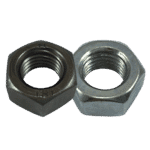
Most metric nuts are still purchased to the withdrawn DIN standard, you would expect that you will get the property class that you specified, however there is an important issue that you may need to consider. DIN standard nuts can be made to the mechanical properties of DIN 267 part 4 or ISO 898-2, the problem is that the DIN standard does not meet the proof load and hardness required by the now active ISO standard. To this day the manufacturers ask if you want the “Real” class or the cheaper DIN 267 parts.
What is the difference and why should I care? The ISO specification has a slightly higher Proof Load and also require a minimum hardness to ensure the nut does not fail before the bolt/screw.
Per ISO….. An optimized bolted joint, consisting of a bolt, screw or stud of a given property class according to ISO 898-1 assembled with a regular or high nut of the mating property class according to this part of ISO 898 is able to provide a maximum preload, using the full strength of the bolt. In the case of over-tightening, the fracture occurs in the loaded threaded part of the bolt, which gives an obvious indication of a tightening failure.
DIN 267-4 has no minimum hardness requirement, a lower Proof Load and a requirement to mark the class with two vertical lines such as |8| for example.
Why should you care as both standards area valid? Are the DIN 267-4 nuts going to fail, probably not however do you really want to take that risk. A good QC departments could fail the parts and in case of a failure in the field it could be a big mess. There is no good guidance from the standards associations in this regard, Carmen Vertullo from Carver Engineering has spent some time on this subject and there is more to come on this later.
Fuller has been purchasing the parts to the ISO 898-2 if at all possible as the minimal savings are simply not worth the risk, we rather make sure our parts meet both the DIN and ISO mechanical requirements. You should be aware of what you need for your application and what you are purchasing from your suppliers.
More details for your reference can be found at our fullerfasteners.com site. 
Proof Loads: https://fullerfasteners.com/tech/proof-loads-for-fasteners/
Mechanical: https://fullerfasteners.com/tech/mechanical-properties/
More to follow later……..